

Before an air freshener moves into mass production, approving the fragrance, appearance and packaging is only part of the process.
The finished product also needs to be evaluated for fragrance performance, release behavior, temperature stability, material compatibility, leakage or sealing risk, and product-specific function. These checks help determine whether the product can remain stable and perform as intended beyond the initial sample stage.
The exact test plan depends on the air freshener format and fragrance-delivery system being developed. A gel air freshener, membrane air freshener, scented polymer, porous fragrance carrier and liquid spray may share some common tests, but each has different structures, materials and potential failure points. The goal is therefore to verify the risks that matter for that specific product before the design is approved for larger-scale production.
Why Air Freshener Testing Starts Before Mass Production
Air freshener testing should begin during product development because many potential problems are not visible when the first sample is made.
A product may look and smell acceptable during an initial evaluation but behave differently after storage, temperature changes or extended use. Possible issues can include changes in fragrance strength, unexpected weight loss, separation or discoloration, leakage, deformation, material interaction, or changes in the way the product functions. These are the types of problems that stability, performance and compatibility testing are intended to identify before production is scaled up.
Finding these issues during development gives the formulation, materials, product structure or packaging time to be adjusted before the final specification is approved.
Testing continues after the project moves into mass production, but the focus changes. At that stage, checks are used mainly to confirm that finished products remain consistent with the approved sample and specification, including product function, fill weight or volume, assembly and packaging.
Fragrance Performance and Release Testing
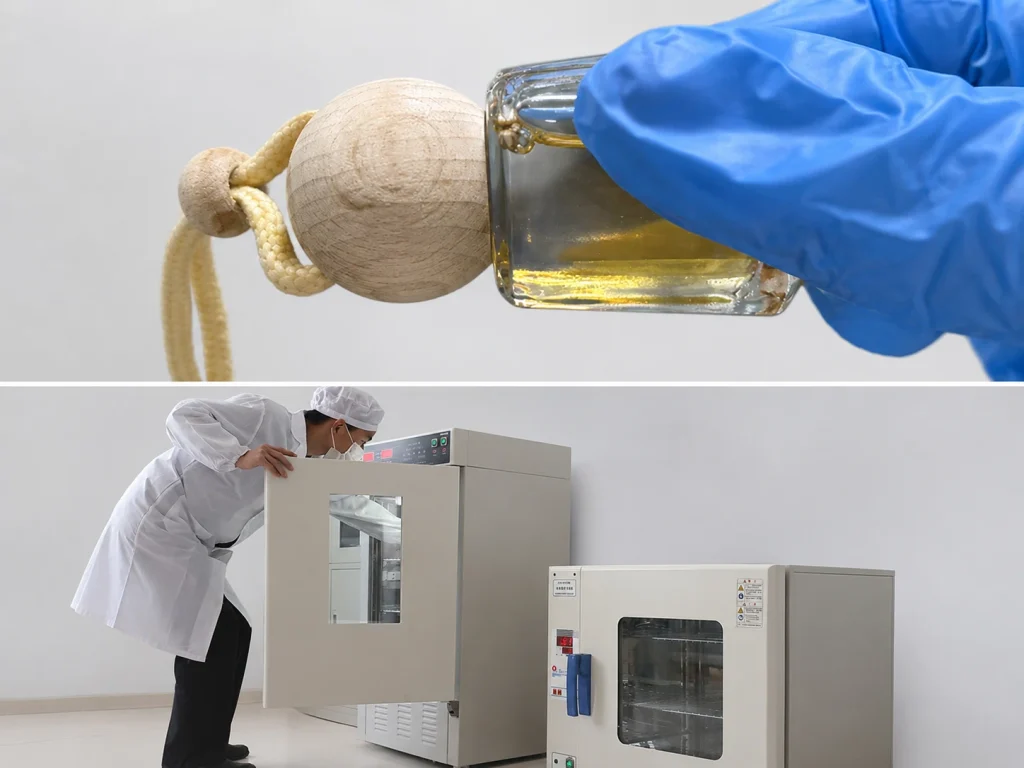
An air freshener needs to do more than smell acceptable when the first sample is opened. It also needs to release fragrance at an appropriate strength and maintain that performance over the intended period of use.
For this reason, fragrance performance is evaluated under controlled conditions rather than relying only on a quick smell check. The product is assessed for scent intensity, and the test environment is kept consistent so that different samples can be compared more reliably. For vent-mounted products, airflow also needs to be considered because it can change the rate at which fragrance is released.
Performance testing is usually paired with weight-loss testing. By tracking how the product loses mass over time, it is possible to observe how quickly volatile content is being released. The weight-loss data is then considered together with fragrance performance, because a faster loss does not necessarily mean better scent performance, and a strong initial fragrance does not always indicate a suitable release rate over time.
The purpose of these tests is to determine whether the fragrance-release behavior matches the intended product format and use condition before the formulation and product structure are approved for production.
Temperature and Stability Testing
Temperature changes can reveal problems that may not appear under normal room conditions. For car air fresheners, this is particularly important because products may be exposed to substantial temperature changes inside a vehicle during storage and use.
High- and low-temperature testing is used to observe whether the complete car air freshener system remains stable after temperature exposure. Depending on the product format, checks may include weight change, sealing, color or fragrance changes, separation, oil or water release, cloudiness, deformation and material corrosion. Products are typically returned to room temperature before their final condition is evaluated.
The test conditions also need to match the formulation and product structure. Water-based, oil-based and other fragrance systems may respond differently to low or high temperatures, while production-stage stability testing may require longer observation periods than development-stage checks.
UV stability testing may also be used where light exposure could affect the product, especially for car air fresheners with transparent packaging or light-sensitive contents. The purpose is to observe possible changes such as discoloration, fragrance change, sedimentation or separation.
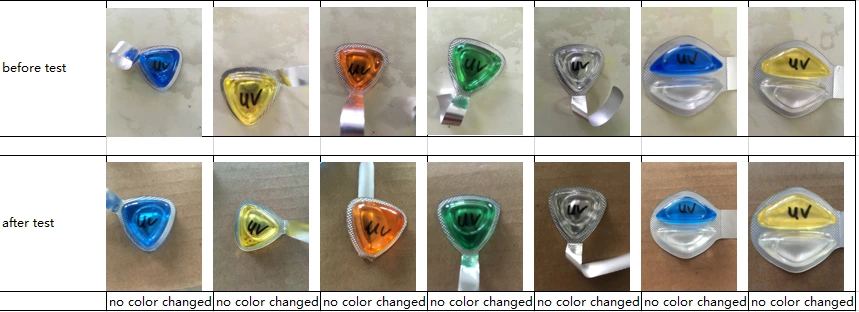
Together, these tests help determine whether a car air freshener can remain stable beyond the initial sample condition and whether any formulation, material or packaging adjustments are needed before production approval.
Material and Packaging Compatibility Testing
Air freshener formulas remain in contact with multiple materials during storage and use, including plastics, plated components, labels, printing and primary packaging. A combination that looks acceptable when first assembled may still develop compatibility problems over time.
Compatibility testing is therefore used to check whether the fragrance or formulation affects surrounding materials, particularly under more demanding conditions. Depending on the product design, this may include looking for discoloration, corrosion, softening or deformation of components, label lifting, printing damage, or other visible changes.
The same principle applies to the packaging itself. Labels and printed surfaces need to remain stable when exposed to the finished product, while plastic or plated parts should not react noticeably with the fragrance system during the expected storage period.
These checks help confirm that the selected materials can work together as one product system before the specification is finalized for production.
Product-Specific Functional and Leakage Testing
Not every air freshener can be evaluated with the same test plan. Different product structures create different failure risks, so additional checks are often needed beyond general stability and compatibility testing.
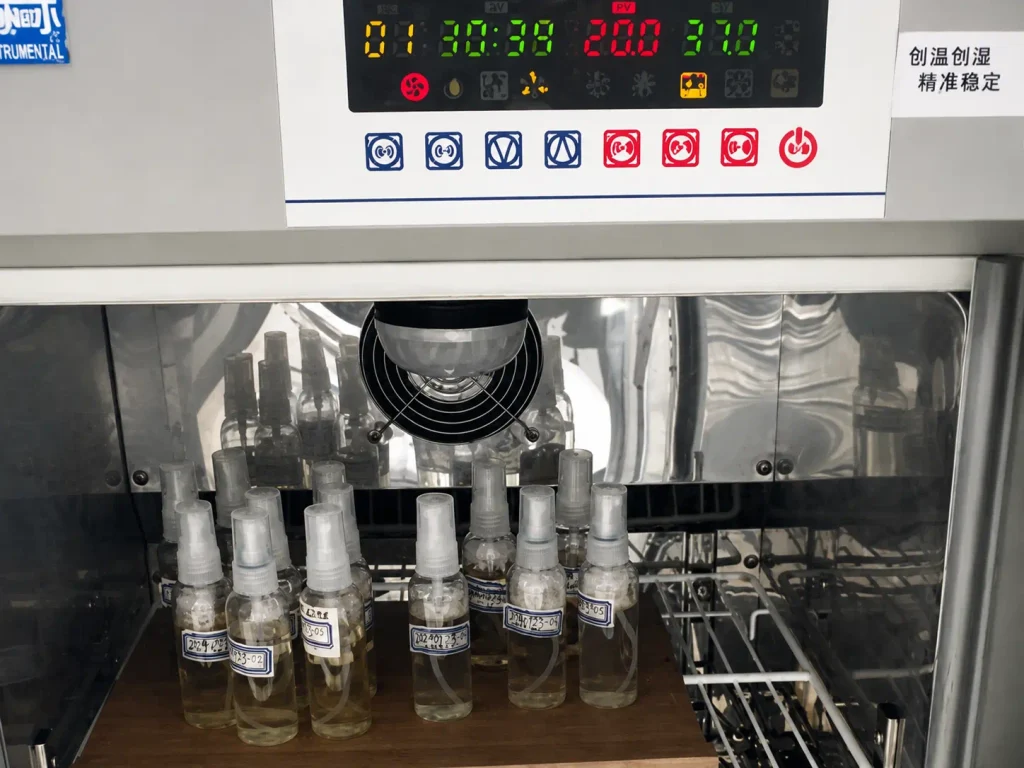
For example, membrane air fresheners may require vacuum or pressure testing to confirm that the sealed liquid system does not leak. Scented polymer fresheners may need to be checked for deformation, oil migration or other changes under heat. Spray fresheners may require leakage checks together with actual spray-use testing to confirm that the dispensing system works properly.
Other air freshener formats may have their own functional requirements, such as fragrance absorption in porous carriers, cap or opening mechanisms, assembly stability, or the way fragrance is transferred from one component to another.
The purpose of these product-specific tests is to focus on the failure points that are most relevant to the actual product design, rather than applying one identical checklist to every air freshener format.
What Changes from Sample Testing to Mass Production?
Testing does not stop once an air freshener sample has been approved. The focus simply changes as the project moves from development into mass production.
During the development and sampling stage, testing is mainly used to confirm whether the fragrance, formula, carrier, packaging and air freshener structure can work together as intended. Performance, stability and compatibility issues can still be corrected before the final specification is confirmed.
During mass production, the emphasis shifts toward consistency and execution. Depending on the air freshener type, checks may include fill weight or volume, assembly, functional use, barcode accuracy and packaging condition, together with selected performance or stability checks.
The objective at this stage is to confirm that the finished car air fresheners remain consistent with the approved sample and production specification, rather than repeating the entire development process.
What Should Buyers Confirm Before Production Approval?
Before an air freshener moves into mass production, the buyer and manufacturer should have a clear reference for what has been approved. This helps reduce ambiguity when the finished batch is later checked against the confirmed sample and specification.
Depending on the car air freshener, the final confirmation may include:
- approved fragrance and formulation;
- appearance, color and overall air freshener structure;
- expected fragrance performance and release behavior;
- stability under the agreed test conditions;
- compatibility between the fragrance, carrier, components and packaging;
- leakage, sealing or other functional requirements where relevant;
- fill weight or volume and assembly requirements;
- approved packaging, labeling and reference sample.
These confirmations should reflect the actual requirements of the custom air freshener project rather than a generic checklist. Different fragrance carriers and structures may require different acceptance points before production is released.
Once these points are agreed, the approved sample and specification provide the reference for subsequent mass-production checks such as function, fill quantity, assembly and packaging consistency.
Effective testing is not about applying the same checklist to every air freshener. It is about identifying the risks that matter for a specific fragrance system, carrier and car air freshener structure, then confirming those points before production is scaled up.
When testing is built into development, sample approval and mass production, potential issues can be identified earlier and the approved air freshener specification becomes a clearer reference for both the manufacturer and the buyer.

