

Car air fresheners are exposed to changing temperatures during transportation, storage and everyday use. These conditions can affect not only fragrance release, but also formulation stability, packaging performance and material compatibility.
High- and low-temperature testing helps identify these risks before mass production and determine whether the finished product remains stable under the conditions it is expected to face. The appropriate test conditions, however, depend on the product system, packaging structure and target market.
Why Temperature Stability Matters for Car Air Fresheners
Car air fresheners may experience very different temperature conditions throughout transportation, storage and daily use. A product can move from a controlled warehouse environment to a hot vehicle interior, or be exposed to lower temperatures during winter distribution and storage.
These temperature changes can affect more than fragrance intensity. Depending on the product format, they may influence the formulation, sealing performance, packaging materials and the appearance of the finished product. This is why temperature stability is one of the key areas to evaluate before air freshener mass production.
The level of concern can also vary by market. For projects targeting hotter regions, especially GCC markets, buyers often pay closer attention to product performance under high-temperature conditions. In other markets, customers may ask more broadly whether both high- and low-temperature stability testing has been completed.
The purpose of temperature testing is therefore not simply to expose a product to extreme conditions. It is to understand whether the complete product system remains stable under the conditions it is likely to encounter during storage, transportation and use.
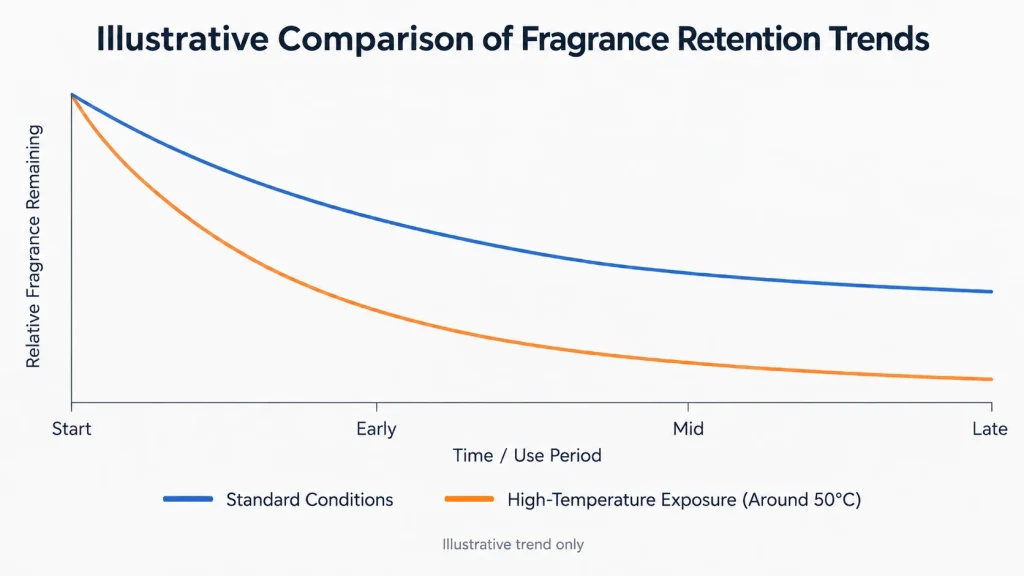
What High and Low Temperatures Can Reveal About a Product
Temperature exposure can reveal problems that may not be obvious under normal room conditions. Depending on the product system, changes may appear in the formulation itself, the fragrance, the packaging or the materials that come into contact with the fragrance.
Formulation Stability
High or low temperatures can affect the physical stability of gels, liquids and other fragrance systems. Depending on the formulation, this may appear as separation, oiling out, water release, cloudiness or changes in gel structure.
These changes are important because a product can still look acceptable at room temperature while becoming unstable after temperature exposure.
Fragrance and Appearance
Temperature can also affect how the finished product smells and looks. High-temperature exposure may accelerate fragrance loss, while both high and low temperatures can reveal changes in fragrance character, color or overall appearance.
For this reason, evaluation should consider more than whether the product is still releasing fragrance. The finished product should also remain visually and sensorially consistent with the approved sample.
Sealing and Packaging Performance
A stable formulation is not enough if the packaging cannot remain reliable under temperature changes.
Testing may reveal leakage, poor sealing, container deformation or changes in outer packaging. These risks are especially important for liquid and gel products, where fragrance loss or leakage can affect both product performance and retail presentation.
Material Compatibility
Fragrance formulations can interact with plastics, coatings, plated components and other materials used in the finished product.
Temperature exposure can make these compatibility issues easier to identify by revealing deformation, corrosion or other visible changes in components that contact the fragrance.
High and low temperatures do not always reveal completely separate risks. In many cases, the same product should be evaluated as a complete system, because the formulation, fragrance, packaging and materials can affect one another under changing temperature conditions.
Why the Same Temperature Test Does Not Fit Every Air Freshener
Different air freshener formats respond to temperature in different ways. The formulation, carrier material, packaging structure and the materials in contact with the fragrance all influence which risks are most relevant.
A water-based gel, for example, may need to be evaluated for issues such as separation, water release or changes in gel appearance. Its low-temperature condition may also depend on whether the formulation contains an antifreeze system. Oil-based gels and liquid fragrance systems may show different risks, such as oiling out, cloudiness or changes in material compatibility.
Membrane, polymer and other molded fragrance products introduce another set of variables. In these formats, the stability of the fragrance system needs to be considered together with the membrane, plastic components and overall product structure.
Porous carriers such as paper, wood or gypsum behave differently again. Their temperature evaluation may place more emphasis on fragrance retention, visible oil migration, appearance and packaging condition rather than the same formulation changes seen in gels or liquids.
For this reason, temperature conditions should be selected according to the product system and the environment the finished product is expected to encounter. A project intended for a hot-climate market such as the GCC region may place greater emphasis on high-temperature exposure, while other projects may require a more balanced evaluation of both high- and low-temperature conditions.
The goal is not to apply one temperature range to every air freshener, but to choose conditions that can reveal the most relevant risks before the product moves into mass production.
How Temperature Stability Is Evaluated Before Mass Production
Temperature stability testing usually begins with a clear record of the product before exposure. The appearance, weight, packaging condition and formulation condition can be documented so that any changes are easier to identify later.
The finished product is then placed under selected temperature conditions based on the product system and project requirements. During the test, the development team observes whether changes appear in the formulation, fragrance, sealing, packaging or materials that come into contact with the fragrance.
Typical checks may include:
- leakage or sealing changes
- separation, cloudiness or oiling out
- fragrance or color changes
- deformation of plastic or packaging components
- corrosion or other material compatibility issues
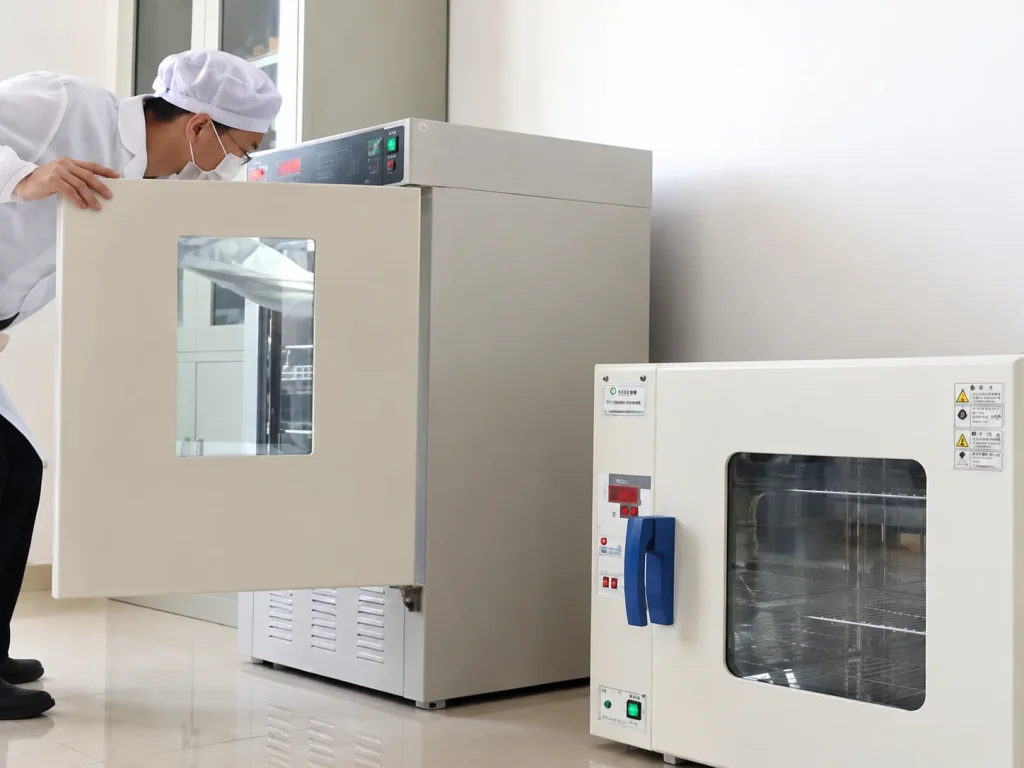
After temperature exposure, the product should be allowed to return to room temperature before the final evaluation. This helps determine whether any changes are temporary or whether the product remains affected under normal use conditions.
The final result should then be compared with the approved product requirements and the conditions expected in the target market. Rather than asking whether a product has simply “passed a temperature test,” the more useful question is whether it remains acceptable for its intended storage, transportation and use conditions.
What Buyers Should Confirm Before Approving a Car Air Freshener
Before approving a car air freshener for mass production, buyers should confirm that the temperature test conditions are relevant to the finished product and its intended market.
Key questions include:
- What temperature conditions is the product likely to experience during transportation, storage and use?
- Which temperature-related risks are most relevant to this product format?
- Do the formulation and packaging require different high- and low-temperature conditions?
- What changes would be considered acceptable or unacceptable before production approval?
For custom air freshener projects intended for hotter markets, high-temperature performance may require more attention during development. For products expected to experience wider seasonal variation, both high- and low-temperature stability may need to be evaluated more evenly.
The purpose of temperature testing is not simply to expose a sample to extreme conditions. It is to confirm that the fragrance system, formulation, packaging and materials remain suitable for the conditions the finished product is expected to face before mass production.

