

Fragrance Development for Custom Air Fresheners
Choose the Right Development Path
Start with an Existing Fragrance Direction
Start from an existing fragrance direction when you have a general scent preference and want to move into air freshener product sampling more quickly.
Match or Refine a Reference Fragrance
Use a reference fragrance, existing product or target scent profile as the starting point, then adjust the direction to better fit your brand and product requirements.
Develop a New Fragrance Direction
Start from a fragrance brief when you need a scent developed around a specific brand concept, market position or customer experience.
Popular Scent Directions
 Vanilla
 Sandalwood
 Ocean
 New Car
 Lavender
 Citrus
Define the Fragrance Brief
Key inputs before product sampling
Brand & Market Positioning
Define the brand style, target market and customer profile the fragrance should support.
Target Scent Direction
Set the preferred fragrance direction, such as fresh, woody, fruity, clean, floral or other target profiles.
Reference Fragrance or Existing Product
Provide a reference scent, existing product or market example when there is already a clear fragrance target.
Target Scent Duration
Set the expected fragrance duration based on the intended use and product positioning.
Match the Product Format to the Fragrance Performance
Selecting the right product format is therefore part of fragrance development, not a separate decision.

Release Method
Different air freshener formats release fragrance in different ways. Paper and gel rely mainly on passive diffusion, vent clip products can use airflow to increase fragrance release, membrane systems provide more controlled diffusion, while sprays release fragrance only when used.
Target Scent Duration
The expected product life influences the choice of carrier, fragrance loading and release structure. Products designed for short-term promotional use may require a different format from those intended to provide fragrance over a longer period.
Scent Strength
A stronger initial scent does not always mean better performance. Fragrance strength needs to be balanced with release speed and product life so the scent remains appropriate throughout the intended use period.
Use Environment
Temperature, airflow, placement and space size can all affect fragrance release. A vent clip air freshener used with car airflow behaves differently from a hanging air freshener or a passive dashboard format.
Based on these requirements, the fragrance can be matched with an appropriate format such as paper, vent clip, membrane, gel, hanging bottle, molded scented material or spray.
Sample, Evaluate & Refine
Fragrance Direction Review
Confirm the selected or developed fragrance direction before applying it to the intended air freshener format.
Product Application Sample
Apply the fragrance to the intended air freshener format so scent strength, character and overall experience can be evaluated in the actual product.
Customer Evaluation
Evaluate the sample against the original fragrance brief, reference scent and target product experience.
Fragrance Refinement
Adjust the fragrance direction or application when needed, then prepare the revised product sample for further evaluation and validation.
Fragrance Application Testing

Scent Performance Evaluation
Finished samples are evaluated in a controlled scent-testing space to assess fragrance intensity and overall scent perception. Consistent temperature, humidity and airflow conditions help make sample comparisons more reliable.
Weight Loss & Release Testing
Product weight is tracked over time under controlled conditions to understand fragrance consumption and release behavior. Vent clip products can also be tested under controlled airflow to better reflect their actual use in a car.
High & Low Temperature Stability
Finished and packaged products are exposed to different temperature conditions to evaluate changes in weight, fragrance, color, sealing and material condition. The test also helps identify issues such as separation, leakage, deformation or changes in the fragrance system.
UV Stability
Packaged samples are exposed to UV conditions and compared with samples stored under normal conditions. Changes in color, fragrance or product stability are recorded over time.
Documentation & Production Support
Shamood supports the transition from development into compliant and consistent production.
Fragrance Documentation
Support can include IFRA-related documentation, SDS and other relevant fragrance declarations for the approved air freshener application and target market.
Production Specifications
Approved fragrance, application level and key product requirements are documented for production to help maintain consistency between sampling and mass production.
Batch Consistency
Fragrance and finished-product performance are checked against approved standards to reduce variation between production batches.
Manufacturing Coordination
Fragrance, product structure, packaging and production requirements are coordinated together so the approved product can move into mass production more smoothly.
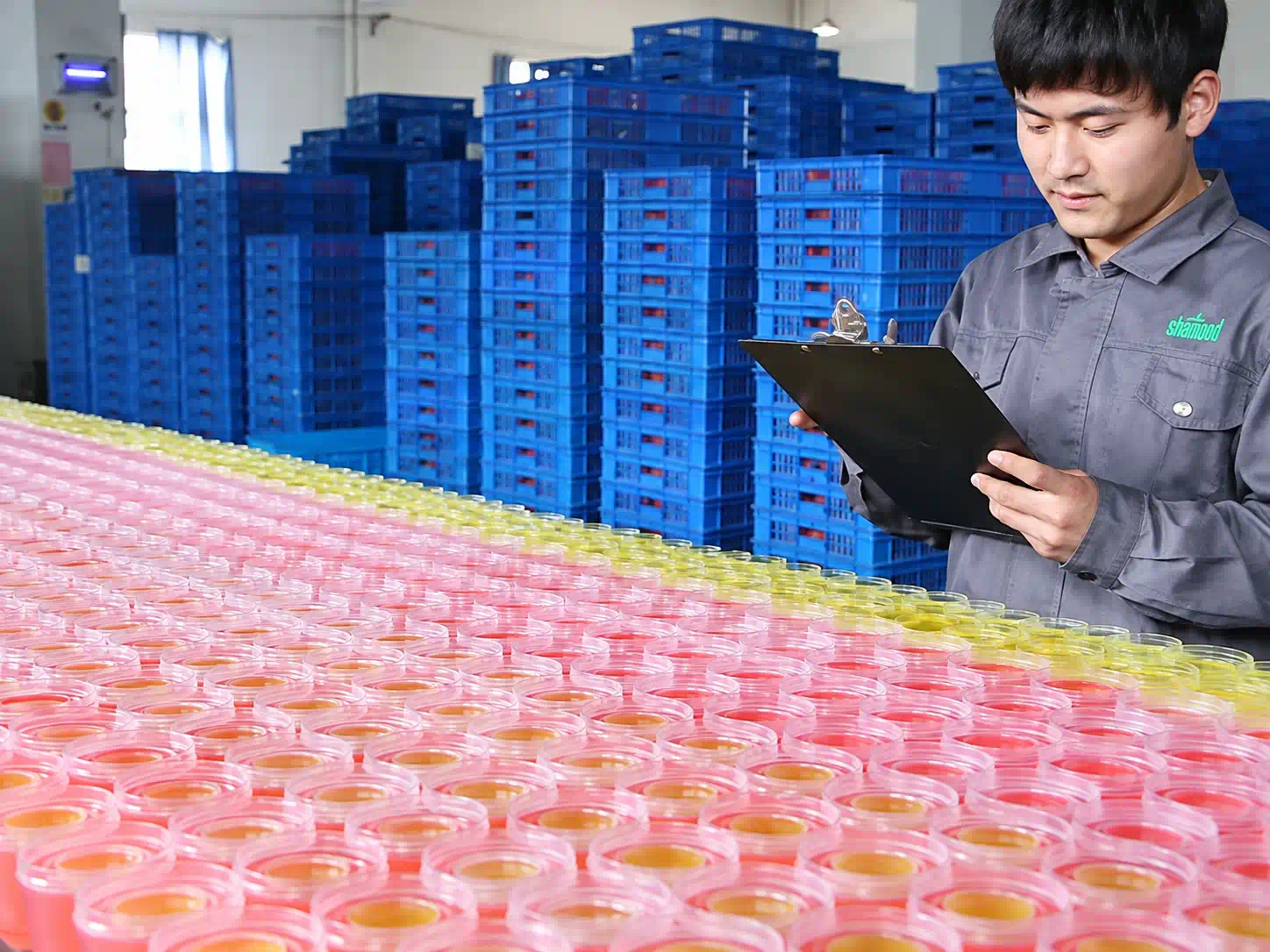
Frequently Asked Questions
Can you match or modify a fragrance for my air freshener products?
Yes. You can provide a fragrance reference, existing product or target scent direction. The fragrance can then be matched or refined around your product and brand requirements.
Can you develop a new fragrance direction for my car air fresheners?
Yes. Development can start from your brand positioning, target scent direction, reference preferences and expected product performance.
Can I use my own fragrance oils?
Yes. You can send your fragrance oils to our team in China for evaluation and product sampling. Before mass production, the fragrance should be tested in the intended air freshener format for compatibility, release performance and stability, and relevant fragrance documentation may also be required.
How do you evaluate fragrance performance and scent duration?
Finished samples can be evaluated through scent performance testing and weight-loss testing under controlled conditions. The testing method can also be adapted according to the product format and project requirements.
What fragrance documentation can you provide?
Support can include IFRA-related documentation, SDS and other relevant declarations depending on the fragrance, product application and target market.
What is the MOQ for custom air freshener production?
Typical MOQ is 3,000–10,000 units per fragrance, depending on the product format, design and customization requirements.

