

Whether you’re building a new brand or adding custom air fresheners to an existing product line, getting started isn’t always straightforward. With different product formats, customization options, and manufacturing approaches available, it can be difficult to know where to begin. One of the biggest challenges is knowing which decisions need to be made first—and which ones can wait until later.
This guide answers three practical questions many first-time buyers ask before starting a custom air freshener project. By understanding your development options, preparing the right project information, and knowing what to expect before production, you’ll be able to move forward with greater confidence.
Do You Need a Fully Custom Air Freshener?
One of the first questions many brands ask is whether creating a custom air freshener means developing a completely new product. It doesn’t.
Most custom air freshener projects begin in one of two ways. You can build on an existing product platform and customize it for your brand, or you can develop a fully custom solution around your own product requirements. Both approaches can lead to a successful product, but they serve different business needs.
Start with an Existing Product
Starting with an existing product doesn’t mean buying a generic product off the shelf. It means using a proven product format as the foundation while customizing the elements that define your brand, such as the artwork, fragrance, and packaging.
For many brands, this development approach is similar to a private label project. Instead of investing in a completely new product structure, you focus on creating a custom air freshener that reflects your brand while reducing unnecessary development work.
This approach works well when an existing product format already meets your functional requirements. For example, you may already know you’re looking for paper air fresheners, vent clip air fresheners, hanging air fresheners, or other product formats. Rather than redesigning the product itself, you can focus your investment on branding, packaging, and preparing the product for your target market.
If a proven product format already meets your project requirements, developing a completely new structure may not add meaningful value to the project.
Choose a Fully Custom Solution
A fully custom solution becomes valuable when an existing product format cannot support your product concept or brand objectives. Instead of adapting an existing design, you develop a custom air freshener around your own project requirements.
Depending on the project, customization may include the product structure, fragrance system, packaging, materials, or other project-specific features. Because more elements are developed from the beginning, these projects usually require additional development, validation, and coordination before production begins.
When the product itself is an important part of your brand strategy or market differentiation, investing in fully custom development often becomes the better long-term choice.
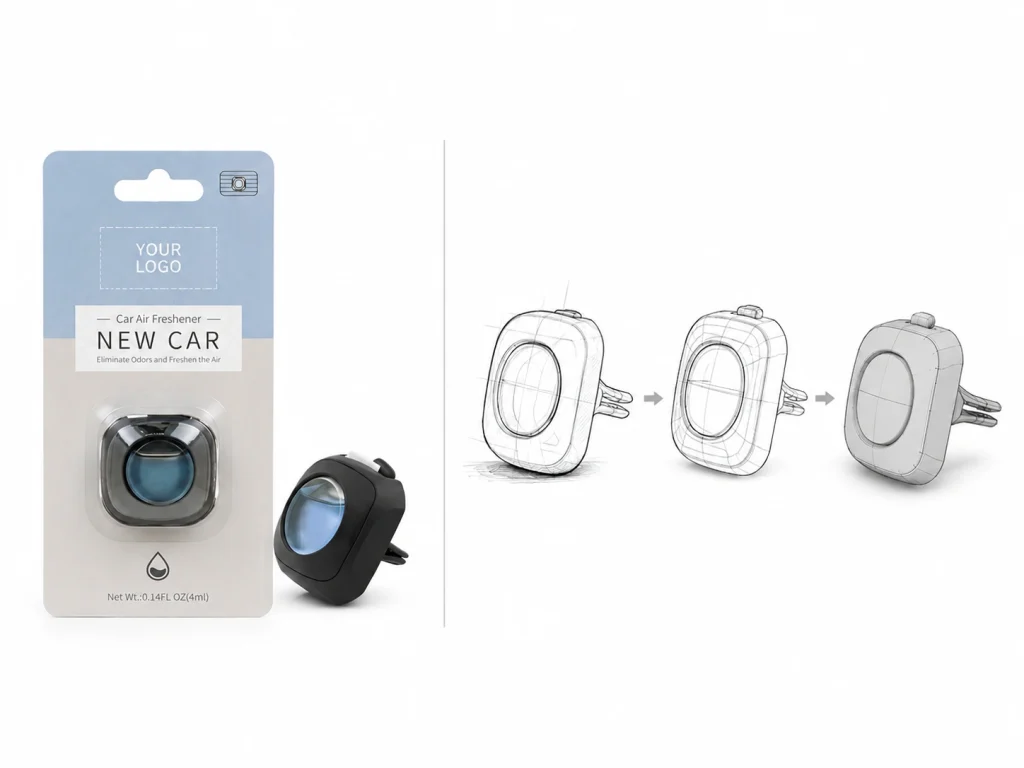
Existing Product vs. Fully Custom
| Development Comparison | Existing Product | Fully Custom |
|---|---|---|
| Initial investment | Lower | Higher |
| Time to launch | Shorter | Longer |
| Project difficulty | Low | High |
| What you can customize | Branding, fragrance, packaging | Product structure, branding, fragrance, packaging |
| Development starting point | Proven product platform | Project-specific requirements |
Neither approach is inherently better than the other. The best choice depends on what you’re trying to achieve and whether an existing product platform can already support your project goals.
Once you’ve decided how to develop your product, the next step is preparing enough information to begin meaningful discussions with a manufacturer.
What Should You Prepare First?
You don’t need every detail before contacting a manufacturer. You only need enough information to describe the project you want to develop.
The clearer your project direction is, the easier it becomes to evaluate product options, recommend the right development approach, and prepare a quotation based on realistic project requirements.
For example, you may already know you’re looking for paper air fresheners, vent clip air fresheners, hanging air fresheners, or other product formats. That’s usually enough to begin discussing the project, even if many of the details haven’t been finalized yet.
Project Information Checklist
| Project Information | Best to Have | Can Be Decided Later | Why It Matters |
|---|---|---|---|
| Product type | ✓ | Defines the overall product direction and suitable manufacturing approach. | |
| Target market | ✓ | Determines fragrance preferences, packaging, labeling, and regulatory considerations. | |
| Estimated order quantity | ✓ | Determines whether the proposed solution is commercially and operationally feasible. | |
| Brand name / Logo | ✓ | Provides a starting point for branding, printing, and packaging discussions. | |
| Fragrance selection | Later | Can be refined through fragrance development and sampling. | |
| Packaging details | Later | Can be developed after the product format and sales channel are confirmed. | |
| Final artwork | Later | Usually completed after dimensions and technical requirements are finalized. |
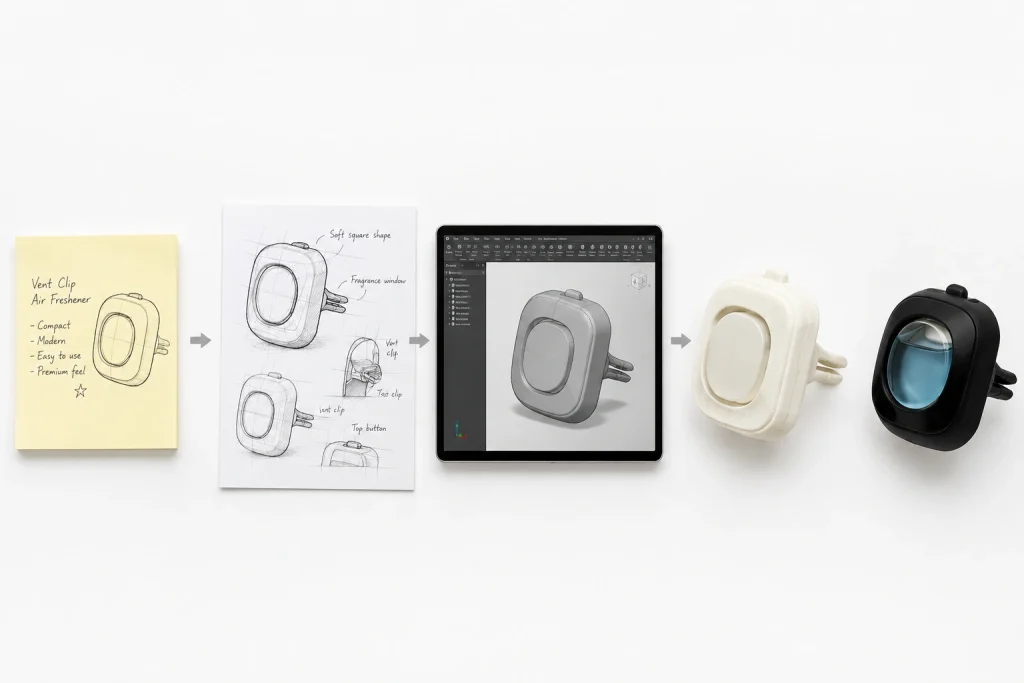
Don’t worry if some of the optional items are still undecided. Many custom air freshener projects begin with a clear concept rather than a finished specification.
At this stage, your goal isn’t to prepare every technical detail. It’s to provide enough information for a manufacturer to understand your project, evaluate possible solutions, and move the discussion forward.
With these basics in place, there are still a few practical points worth understanding before development begins.
What Should You Know Before You Start?
Choosing the right development approach and preparing the basic project information are important first steps. Before moving into product development, there are also a few practical realities that every first-time buyer should understand.
These points won’t determine whether your project succeeds, but they can help you avoid unnecessary delays, misunderstandings, and unrealistic expectations during the development process.
Don’t Copy Existing Brands
It’s common to study successful products before developing your own. Looking at popular brands can help you understand product positioning, fragrance trends, or packaging ideas.
However, inspiration and duplication are not the same thing.
Copying another brand’s artwork, product shape, packaging design, or other identifiable elements may create intellectual property issues and weaken your own brand positioning. Instead, use existing products as market references while developing a custom air freshener that reflects your own business and target customers.
Building an original product usually creates more long-term value than trying to reproduce someone else’s success.
Know What Affects Pricing
Unlike standard retail products, custom air fresheners are not priced from a fixed catalogue.
The final quotation depends on the overall project rather than a single product. Product type, dimensions, materials, fragrance, printing, packaging, estimated order quantity, and other customization requirements all influence the final price.
For this reason, asking “How much does a custom air freshener cost?” without additional project information rarely leads to a meaningful quotation.
You don’t need a complete technical specification before requesting pricing. However, providing enough information to define the overall project allows manufacturers to recommend suitable solutions and prepare quotations based on realistic assumptions instead of rough estimates.
A quotation becomes far more valuable when it helps you evaluate the project—not simply compare prices.
Plan Around Production Requirements
Many first-time buyers hope to begin with a very small order to reduce business risk. While the idea is understandable, custom manufacturing works differently from purchasing standard products.
Every custom air freshener project requires production planning before manufacturing can begin. Materials need to be prepared, printing processes arranged, fragrances confirmed, and production schedules coordinated. These activities remain necessary regardless of whether the order is relatively small or large.
Minimum production quantities are therefore not simply purchasing rules. They help ensure that production can be carried out efficiently while maintaining consistent quality throughout the manufacturing process.
When planning your project, think beyond the first order. A realistic production plan often creates a smoother development process and provides a stronger foundation for future product launches.
Every custom air freshener project starts with a clear direction rather than a finished specification.
Once you’ve selected the right development approach, prepared the essential project information, and understood the basic production realities, the remaining details can usually be refined throughout product development.
The goal isn’t to have every answer from the beginning. It’s to start with enough clarity that the right decisions can be made as the project moves forward.

