

Custom air fresheners often appear simple, but a successful product depends on more than choosing a shape, fragrance and logo. Decisions made during concept development can affect fragrance release, ease of use, production cost and the product’s performance after it reaches the market.
Many problems do not begin during mass production. They begin earlier, when a concept is approved without considering how the product will function, how its components will work together or how its performance will be validated. The following mistakes can help buyers identify these risks before they become expensive to correct.
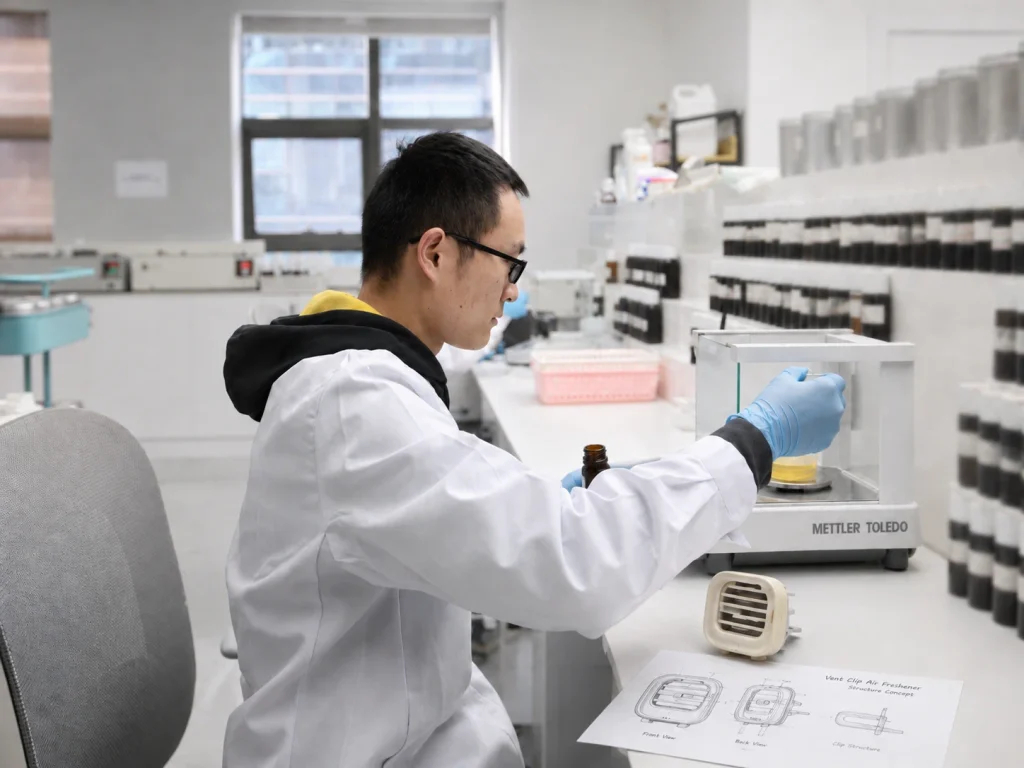
Designing the Shape Before Defining How the Product Should Work
Buyers who are still defining their product can first review how custom air fresheners move from an initial idea to a production-ready product. A custom shape should support the way the air freshener is installed, used and releases fragrance. When appearance is approved first, the final design may restrict airflow, reduce the fragrance-release area or make the product difficult to handle.
This often happens when a logo, mascot or visual concept is transferred directly into a physical product. Details that work in a drawing may require extra parts, complex tooling or difficult assembly without improving the user experience.
Define the installation method, product orientation and fragrance-release mechanism before approving the final shape. The goal is not to remove distinctive design features, but to make sure they can be manufactured and used as intended.
Finalizing the Concept Without Validating Market and Use Requirements
A workable product concept must also suit the market in which it will be sold. Before development moves forward, buyers should confirm the intended use environment, target customer expectations, sales channel and expected retail position.
A concept may be visually appealing but still be unsuitable for the way customers expect to use, display or purchase the product. Checking these basic requirements early helps prevent a design from moving into tooling and sampling before its commercial direction is clear.
Developing the Fragrance Carrier and Product Structure Separately
An air freshener is a complete fragrance-delivery system. The fragrance, carrier material, product structure and release area must work together. Developing these elements separately can result in weak scent, uneven release, leakage or material damage.
The same fragrance formula may perform differently in paper, gel, membrane, liquid or scented plastic products. Fragrance concentration alone does not determine performance. The carrier’s absorption capacity, exposed surface area, airflow and sealing method also affect scent strength and product life.
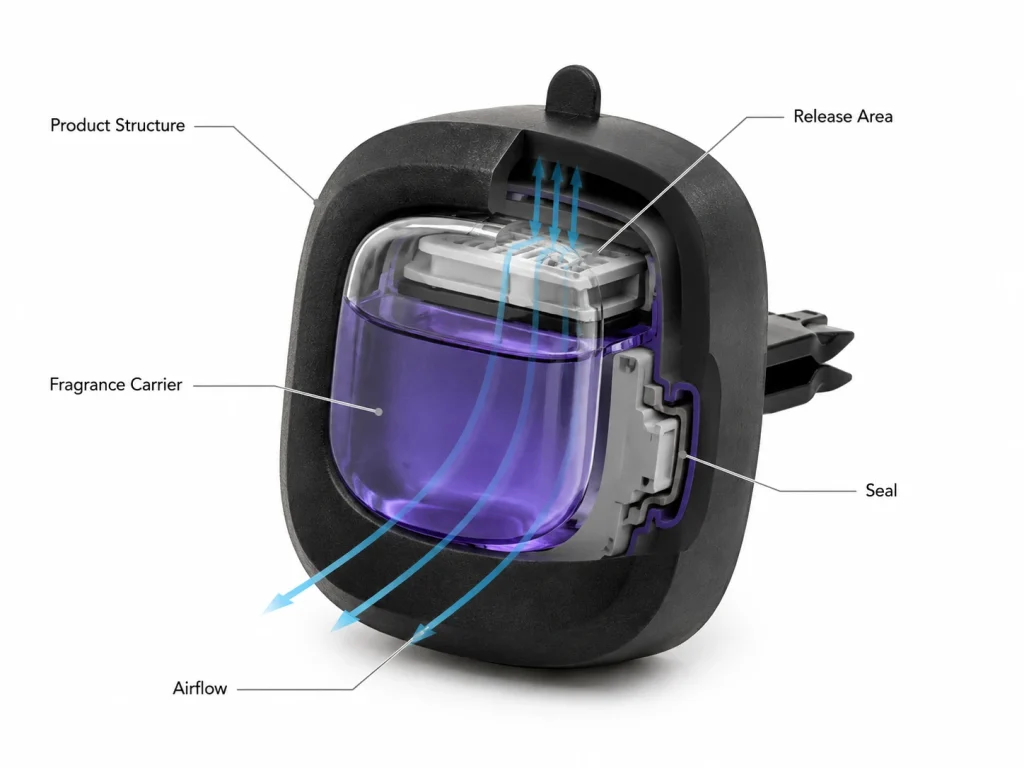
Material compatibility must also be confirmed during development. Some fragrance ingredients may soften plastic, affect coatings, weaken adhesives or cause discoloration. A structure that works with one formula may not remain stable after the fragrance or concentration changes.
The fragrance system and physical structure should therefore be developed and sampled together. Any change to the formula, carrier, fill volume or release mechanism should be reviewed as a change to the complete product—not as an isolated adjustment.
Comparing Prices Without Comparing Product Specifications
Two custom air freshener quotations may describe products that look similar but use different materials, fragrance loads, dimensions or packaging. Comparing only the unit price can therefore create a misleading result.
These differences are especially common with paper air fresheners. Buyers may later ask why the scent disappeared within one or two days, why the printed surface started to fade or why the paper feels unusually soft. These issues are often connected to specifications that were not compared clearly before ordering.
Fragrance load directly affects scent strength and longevity, while the paper material affects absorption, stiffness and fragrance release. Printing quality, fragrance compatibility and barrier packaging can also influence discoloration and how well the product performs after opening. Two paper air fresheners with the same shape and artwork may therefore have very different costs and results.
Before comparing suppliers, buyers should align the main specifications, including product size, paper type and thickness, fragrance load, printing method, accessories, individual packaging and order quantity. Tooling, testing, compliance documents and freight terms should also be separated from the unit price where applicable.
A useful quotation should make the product scope clear. The objective is not to select the highest or lowest price, but to confirm that each supplier is pricing the same product requirement.
Approving the Final Product Without Performance Testing
A finished sample may look correct and still fail under real use conditions. Appearance, fragrance and assembly should not be the only approval criteria before mass production.
Performance testing should reflect the product format and intended environment. This may include fragrance longevity, release consistency, leakage resistance, seal integrity, installation stability and material behavior under heat or prolonged fragrance exposure. Packaging should also be checked to confirm that the product remains protected during storage and transportation.
The test conditions should match how the product will actually be used. A vent clip may need to remain secure under airflow and higher vehicle temperatures, while a hanging bottle must control liquid release without leaking. Gel and membrane products may require checks for evaporation, deformation and sealing performance.
Any change to the fragrance formula, material, component or packaging can affect the final result. These changes should be tested before the product is approved for production, rather than treated as minor adjustments after the sample has already been signed off.
Avoiding Problems Before Production Begins
Most custom air freshener problems are easier to correct during development than after tooling or mass production begins. A clear product brief, aligned specifications and complete sample testing allow buyers and manufacturers to identify risks before they affect cost, delivery or product performance.
The development process should connect the product’s intended use, physical structure, fragrance system, materials and packaging. Decisions in one area should not be approved without considering how they affect the complete product.
Working with an experienced custom air freshener manufacturer can also help buyers evaluate technical options, compare specifications and validate samples before production. The objective is not simply to reproduce a design, but to develop a product that can be manufactured consistently and perform as expected in the market.

