

Hanging glass bottle air fresheners require more than fragrance evaluation before mass production. Because these products contain liquid fragrance in a small glass container, leakage prevention is one of the main concerns during product development.
Testing focuses on the sealing system, fragrance performance, material compatibility and product consistency. These checks help identify potential issues before a custom design moves into mass production.
What Makes Hanging Bottle Fresheners Different?
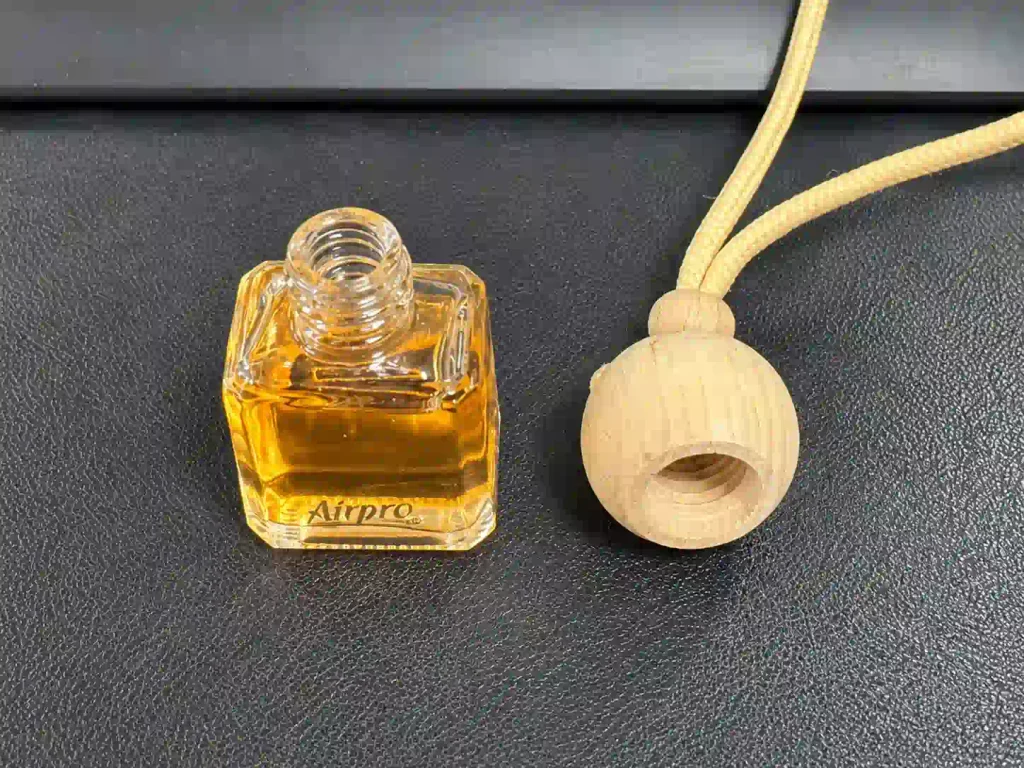
Unlike solid or gel air fresheners, hanging bottle fresheners contain liquid fragrance inside a glass bottle. The inner stopper and cap help prevent leakage during storage and transportation, while the wooden cap allows fragrance to be released after activation.
For this type of hanging diffuser, testing needs to consider two conditions: keeping the bottle sealed before use and allowing fragrance to release without unintended leakage during normal use.
Leakage and Sealing Tests
Leakage is one of the main concerns when developing hanging bottle fresheners. Testing focuses on the complete assembly, including the glass bottle opening, inner stopper, wooden cap and fill level. Even small differences in component fit can affect sealing performance.
Sealing Before Use
The filled bottle is checked with the stopper and cap properly installed. Depending on the product design, flat-lay testing and vacuum leakage checks can be used to evaluate sealing performance. These tests help identify leakage problems that may not be visible when the bottle remains upright.
Leakage During Normal Use
After removing the inner stopper, the bottle is briefly inverted to allow the fragrance liquid to reach the wooden cap. The hanging diffuser is then returned to its normal hanging position to observe whether the fragrance is released as intended without unwanted dripping or leakage.
Testing the Final Product Configuration
Different bottle shapes, stopper designs, fill levels and fragrance formulations may affect leakage performance. Testing should therefore be carried out using the final product configuration before mass production, rather than relying only on previously approved components.
Fragrance Performance and Weight-Loss Testing
Besides preventing leakage, a hanging diffuser needs to release fragrance at an appropriate rate during use. Fragrance performance and weight-loss testing help evaluate how the product performs over time.
Fragrance Performance Testing
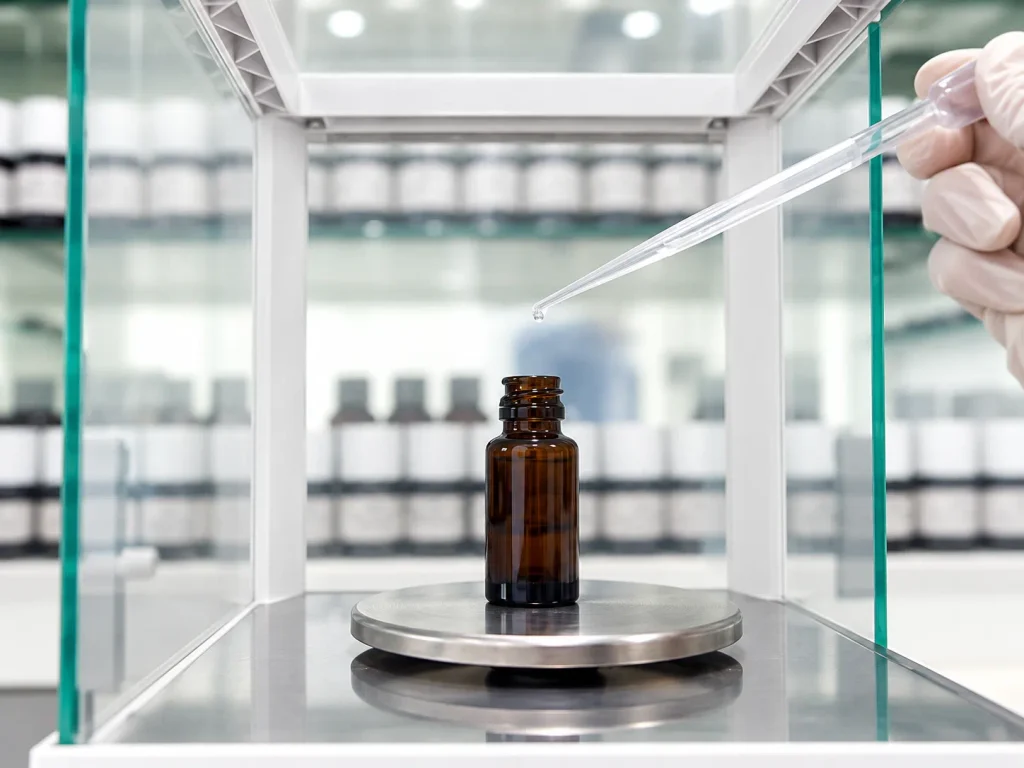
After activation, samples are evaluated in a controlled testing space. The internal testing method uses a room of approximately 8.8 m³, with fragrance intensity assessed after one hour. Temperature, humidity and airflow are kept consistent to allow comparisons between different fragrance options.
Weight-Loss Testing
Samples are also weighed regularly under standard conditions of 25°C and 50% relative humidity. Changes in weight help track the fragrance evaporation rate over time.
These results are evaluated alongside fragrance intensity, as weight loss alone cannot determine how long the scent remains noticeable.
Temperature Stability and Material Compatibility
Temperature changes during storage and transportation can affect the fragrance liquid, sealing performance and packaging materials. High- and low-temperature testing helps identify potential problems before mass production.
Temperature Stability Testing
Packaged samples are tested under high, room and low-temperature conditions. After returning to room temperature, they are checked for leakage, changes in fragrance, discoloration, separation and damage to packaging components.
Material Compatibility Testing
Fragrance liquids may react with certain plastic or plated components. Compatibility testing evaluates whether these materials show signs of discoloration, deformation or corrosion after contact with the fragrance formulation.
UV stability may also be evaluated to check for changes in the liquid’s color, fragrance or appearance.
Functional Checks and Filling Consistency
In addition to fragrance and leakage testing, the finished hanging diffuser needs to be checked for proper assembly and consistent filling.
Assembly and Function Checks
The bottle cap should screw on smoothly without damaged threads or loose fitting. Other components, including the inner stopper and hanging cord, can be checked against the approved sample to confirm correct assembly and fit.
Filling Consistency
The fragrance liquid volume is checked against the specified filling requirement. During mass production, sampled bottles are inspected to identify filling differences and confirm that the products meet the approved specifications.
These checks help maintain consistency between the approved sample and the finished production batch.
Before Mass Production Approval
Before moving into mass production, hanging bottle fresheners should be evaluated for leakage, fragrance performance, material compatibility and assembly. Testing the final product configuration helps identify potential issues and confirm that the design meets project requirements.
For custom hanging glass air freshener projects, these checks provide a basis for sample approval and more consistent production.

