

Membrane air fresheners use a breathable membrane to release fragrance while keeping the liquid contained. Before mass production, manufacturers need to evaluate both sealing reliability and fragrance performance.
Problems such as liquid leakage, inconsistent fragrance release, or changes under different temperatures can affect product quality and user experience. Testing helps identify these potential issues before the product enters mass production.
Why Is Testing Important for Membrane Air Fresheners?
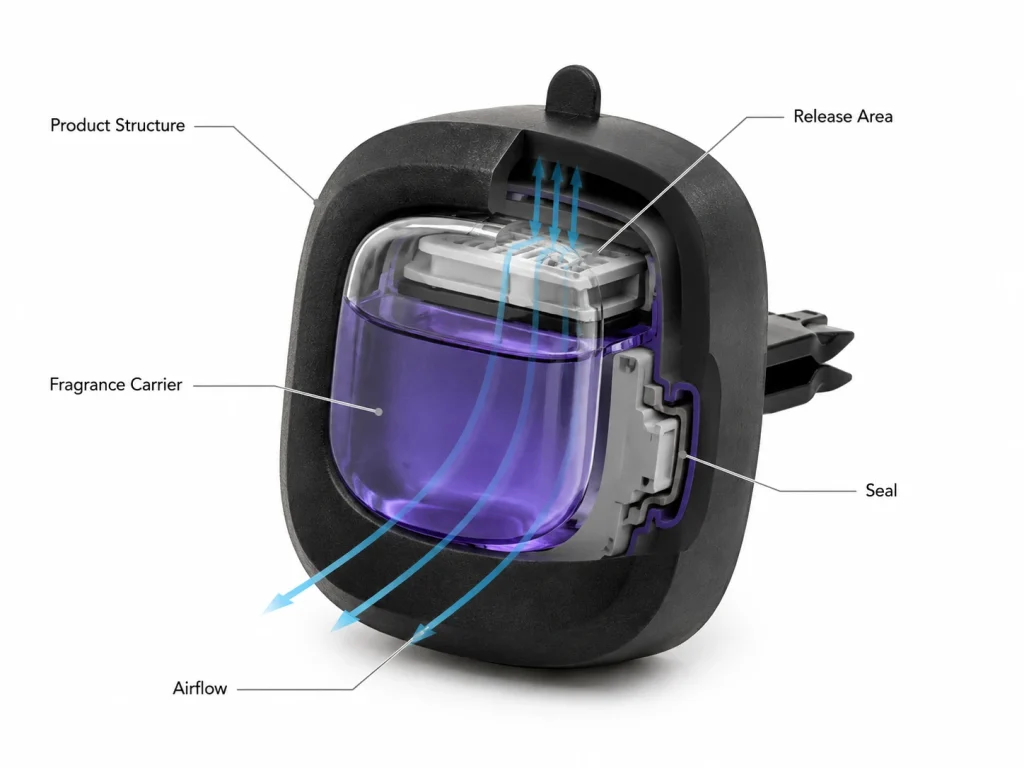
A membrane air freshener has to meet two different requirements. Before use, the liquid must remain securely sealed inside the reservoir. After the protective aluminum seal is removed, the breathable membrane must allow fragrance to escape without letting the liquid leak. Both the membrane and its sealing structure are therefore important to product reliability.
Performance also depends on the fragrance formulation, surrounding materials and expected use conditions. Changes in temperature or airflow may affect fragrance release, while material incompatibility can cause discoloration or damage to plastic components. These checks are part of the broader air freshener testing process before mass productionFor membrane air fresheners, helping manufacturers identify potential issues before the final product design is approved.
How Are Membrane Sealing and Leakage Resistance Tested?
Leakage prevention is one of the most important parts of membrane air freshener testing. Manufacturers use different methods to evaluate whether the membrane and its sealing structure can keep the liquid securely contained under different conditions.
Vacuum Leakage Testing
Vacuum testing helps identify potential leakage problems in sealed membrane air fresheners. During the test, the product is placed in a vacuum testing chamber with the protective aluminum seal still intact. A controlled pressure difference is applied for a specified period, and the product is then inspected for signs of liquid leakage.
This test helps verify the sealing reliability of the assembled product before it is approved for mass production.
Compression Testing
Compression testing evaluates whether a membrane air freshener can resist leakage when external pressure is applied. Unlike vacuum testing, this test is performed after the protective aluminum seal has been removed, exposing the breathable membrane.
The product is subjected to a controlled force for a specified period and then checked for liquid leakage. This helps assess whether the membrane and its sealing structure can maintain their integrity under pressure.
How Are Fragrance Release and Longevity Evaluated?
For custom membrane air fresheners, fragrance performance depends on how the liquid evaporates through the breathable membrane over time. Testing focuses on both the perceived fragrance intensity and the rate of evaporation to evaluate whether the product can deliver the expected scent performance.
Fragrance Performance Testing
Fragrance performance testing evaluates how strongly a membrane air freshener releases scent under controlled conditions. Test samples are placed in a designated testing space, where fragrance intensity is assessed after a specified period.
For vent clip air fresheners, controlled airflow can be introduced to simulate air movement from a car vent. Temperature, humidity and airflow conditions are kept consistent to help compare fragrance performance between different formulations or product designs.
Weight Loss Testing
Weight loss testing is used to track how the fragrance liquid evaporates over time. Samples are kept under controlled conditions, typically around 25°C and 50% relative humidity, and weighed at regular intervals. The recorded data helps manufacturers evaluate the evaporation rate and identify changes throughout the expected product lifespan.
However, weight loss alone cannot determine how long a fragrance remains noticeable to users. The results need to be considered alongside fragrance performance testing to provide a more complete assessment of fragrance longevity.
How Are Temperature Stability and Material Compatibility Tested?
Temperature changes and prolonged contact with fragrance liquid can affect the stability of membrane air fresheners. Before mass production, manufacturers evaluate the liquid formulation and product components to identify potential problems under different conditions.
Temperature Stability Testing
Temperature stability testing evaluates how membrane air fresheners respond to high and low temperatures. Complete products are placed under different temperature conditions for specified periods and then allowed to return to room temperature before inspection.
Manufacturers check for liquid leakage, changes in fragrance color or scent, liquid separation, and deformation or corrosion of plastic components. These observations help determine whether the fragrance formulation and product structure remain stable under the tested conditions.
Material Compatibility Testing
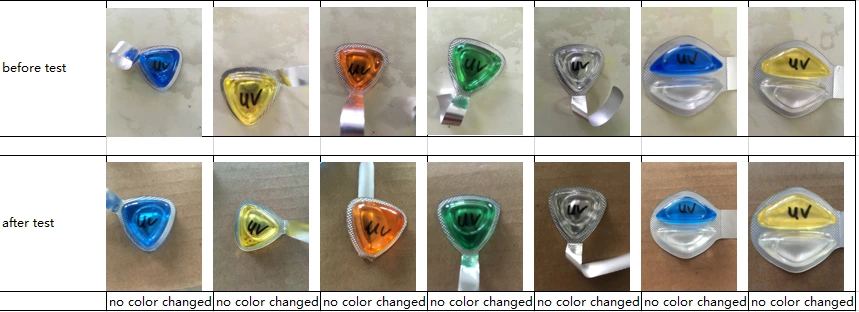
Fragrance formulations may interact with plastic, electroplated or coated components used in membrane air fresheners. Material compatibility testing helps identify whether these components can withstand contact with the fragrance liquid.
During testing, selected components are exposed to the prepared fragrance formulation under controlled conditions, including elevated temperatures when required. Manufacturers inspect them for discoloration, surface damage or other visible changes. If compatibility problems are identified, the fragrance formulation or material selection may need to be adjusted before mass production.
What Other Checks Are Required Before Mass Production?
In addition to leakage and fragrance performance testing, manufacturers also check whether the finished membrane air freshener functions as intended. The protective aluminum seal should be easy to remove without lifting or damaging the breathable membrane. For products with adjustable fragrance openings, the rotating or sliding components should operate smoothly without becoming loose or stuck.
Other quality checks include verifying the fragrance filling volume, inspecting product appearance and confirming packaging details. Packaging drop testing may also be conducted to evaluate whether the products and their packaging can withstand handling and transportation without damage.
What Should Buyers Confirm Before Mass Production?
Before approving mass production, buyers should confirm the final product design, fragrance formulation and intended use conditions. Factors such as the expected fragrance longevity, product application and target market can influence which testing requirements need more attention.
Buyers should also review approved samples and agree with the manufacturer on key quality requirements, including leakage resistance, fragrance performance, appearance and product functionality. These confirmed specifications provide a reference for mass production and quality inspection.
Testing membrane air fresheners before mass production helps manufacturers identify potential leakage, fragrance performance and material stability issues. By validating these factors during product development, brands can reduce production risks and move forward with greater confidence in the quality and consistency of their finished products.

